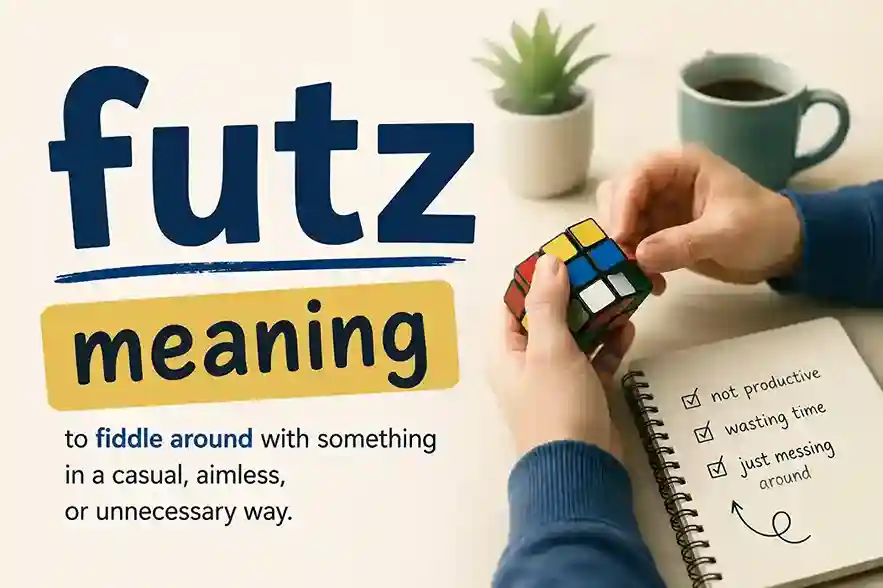
You heard someone say they were “futzing around” and a flicker of doubt crossed your mind. Getting slang wrong can make you feel disconnected. To speak and write with confidence, you need the precise futz meaning. This page delivers a deep dive into the definition, history, and everyday use of “futz” so you can own the word and enrich your vocabulary.
Futz Meaning: A Quick, Clear Definition
The futz meaning is simple: it’s an informal verb that describes wasting time, tinkering with something aimlessly, or fooling around. When you futz, you’re not being productive; you’re idly fiddling, often with small objects or tasks. Merriam-Webster defines futz as “to spend time idly or in aimless or frivolous activity.” Once you internalize this futz meaning, you’ll spot it everywhere—from coffee-break chatter to tech support complaints.
Below, a quick-reference table locks in the most common phrases built around the word.
| Phrase | Meaning | Example Sentence |
|---|---|---|
| Futz around | Waste time doing unimportant things | I futzed around all morning instead of finishing the report. |
| Futz with | Tinker or meddle with something repeatedly | Stop futzing with the thermostat; it’s fine. |
| Futzing | The act of wasting time or fiddling | His constant futzing delayed the project. |
| Futz (base) | To idle or mess about | She futzes with her phone whenever she’s bored. |
The Surprising Yiddish Origin of Futz – Etymology Explained
The futz meaning we know today bubbled up from American slang in the early 20th century, and its roots are wonderfully vivid. The Oxford English Dictionary points to a Yiddish source: arumfartsn, meaning “to fart about.” That earthy image perfectly captures the lazy, aimless quality of futzing. First recorded in print around the 1930s, the word morphed into the softer “futz,” keeping the sense of fiddling without the crude edge. Knowing this backstory makes the futz meaning stick—it’s literally about passing time like harmless hot air.
How to Pronounce Futz (It’s Simpler Than You Think)
Pronunciation: /fʌts/ – rhymes with “butts” and “nuts.” One crisp syllable. No tricky vowels, no silent letters. Say it out loud a few times and it already sounds like a word you’ve known for years.
Futz Around vs. Futz With: Mastering the Phrasal Verbs
To fully grasp the futz meaning, you need to separate its two main phrasal flavors.
- Futz around (intransitive) – behaves like a time-waster. No direct object follows. “We futzed around at the mall until dinner,” for instance.
- Futz with (transitive) – demands an object. You futz with something specific. Example: “Don’t futz with the router unless it’s actually broken.”
Choosing the right one instantly sharpens your speech. If no object appears, “futz around” is your phrase. If you’re poking at a gadget or a spreadsheet, “futz with” lands perfectly.
Futz in Action: Real-Life Sentence Examples
Now that the futz meaning is clear, watch it strut through everyday scenes.
- “I need to stop futzing around and hit the gym.”
- “Grandpa futzed with the radio dial until a jazz station crackled through.”
- “She fiddled with the font choices in her presentation for an hour.”
- “Quit futzing and make a decision.”
Each sentence carries that light, unhurried, slightly exasperated tone that defines the word.
Futz vs. Fiddle vs. Tinker: What’s the Difference?
While all three share the futz meaning of trivial activity, they paint slightly different pictures.
- Futz – aimless, often humorous dawdling. The energy is low, the result irrelevant.
- Fiddle – nervous, repetitive movements, like twirling a pen. It can signal anxiety.
- Tinker – experimental, hands-on tinkering, usually with a goal. You tinker with an engine to fix it; you futz with it and make zero progress.
Using “futz” instead of “fiddle” tells your listener you weren’t just restless—you were gloriously unproductive.
The Cultural Footprint of Futz: From Old Sitcoms to Modern Tech
The futz meaning permeates pop culture. Mid-century comedians tossed “futz” into routines to mock loafers. Later, tech blogs adopted it to describe mindless software tweaks: “I spent an hour futzing with the app settings.” The word thrives in any era where humans find creative ways to avoid real work. It’s the unofficial verb of procrastination, passed down through generations of daydreamers and device-tinkerers.
Is Futz a Bad Word? Understanding the Tone and Formality
The futz meaning carries no vulgarity. It’s informal, definitely, but family-friendly. You can say “stop futzing” to a kid poking a sibling and get the point across without resorting to harsher language. In a professional email, however, it feels out of place. Reserve it for casual conversation, personal essays, or dialogue. Its gentle, teasing quality makes it a safe go-to when you want to call out dawdling without causing offense.
How to Use Futz in Your Writing Without Sounding Forced
When you drop the futz meaning into a sentence, aim for natural beats. Use it in:
- Dialogue: “Will you stop futzing with your tie and get in the car?”
- Personal narratives: “I futzed away the whole Saturday and loved every minute.”
- Humorous commentary: “The committee futzed about for an hour before deciding on pizza.”
Avoid it in academic papers, formal reports, or serious news. The word’s charm lies in its casual, almost conspiratorial wink.
Synonyms and Antonyms to Broaden Your Word Power
A solid command of the futz meaning helps you pick the perfect stand-in or opposite.
Synonyms (waste time, mess about): dawdle, goof off, mess around, lollygag, diddle, piddle, putter.
Antonyms (focus, act with purpose): buckle down, hustle, concentrate, grind, apply yourself.
Sprinkling these into your vocabulary lets you describe everything from a lazy Sunday to a laser-focused work sprint.
Boost Your Communication by Mastering Quirky Verbs Like Futz
Learning the futz meaning isn’t just about adding a word—it builds empathy in conversation. You can now precisely name that half-guilty, half-pleasurable state of puttering. Quirky verbs like “futz” give your language texture and personality. They signal you’re a relaxed, observant communicator. That one small word invites knowing nods and breaks tension in casual talk.
Futz in the Digital Age: Wasting Time on Screens
Your futz meaning becomes crystal clear the moment you glance at a smartphone. Switching between apps without purpose, adjusting brightness “just so,” rearranging a home screen for the fourth time—that’s pure futzing. Tech companies even design interfaces that encourage a little futzing, extending screen time. Recognizing it names a modern habit: the compulsion to tinker with a device that needs no tinkering.
FAQs: Futz Meaning at a Glance
1. What is the exact futz meaning?
The futz meaning refers to spending time idly, fooling around, or tinkering with something without making any real progress. It’s a light-hearted, informal verb.
2. Where does the futz meaning originate?
The futz meaning has Yiddish roots—arumfartsn, literally “to fart about.” It entered American slang in the early 1900s and mellowed into “futz.”
3. How do you use futz in a sentence?
Apply the futz definition when you wish to describe dawdling or messing. “He futzed with the camera settings until the sunset disappeared.”
4. Is futz considered informal?
Yes, the futz meaning is squarely informal. It works great in speech, texting, and casual writing but not in formal contexts.
5. What’s the difference between futz and fiddle?
While the futz meaning overlaps with fiddle, futz emphasizes aimless time-wasting. Fiddle suggests nervous, repetitive fidgeting, often with a physical object.
6. Can you use futz in professional writing?
The futz meaning feels too casual for professional documents. Save it for creative pieces, dialogue, or humorous internal memos where personality shines.
Your Turn to Futz—with Purpose
Now that the futz meaning is no longer a mystery, go ahead and use it. Drop “stop futzing around” into your next casual chat and watch the knowing smiles. Your vocabulary just leveled up with a word that’s as playful as it is precise. So quit futzing over whether you’ll sound natural—you will. Language belongs to the curious, and today you claimed a little piece of it.