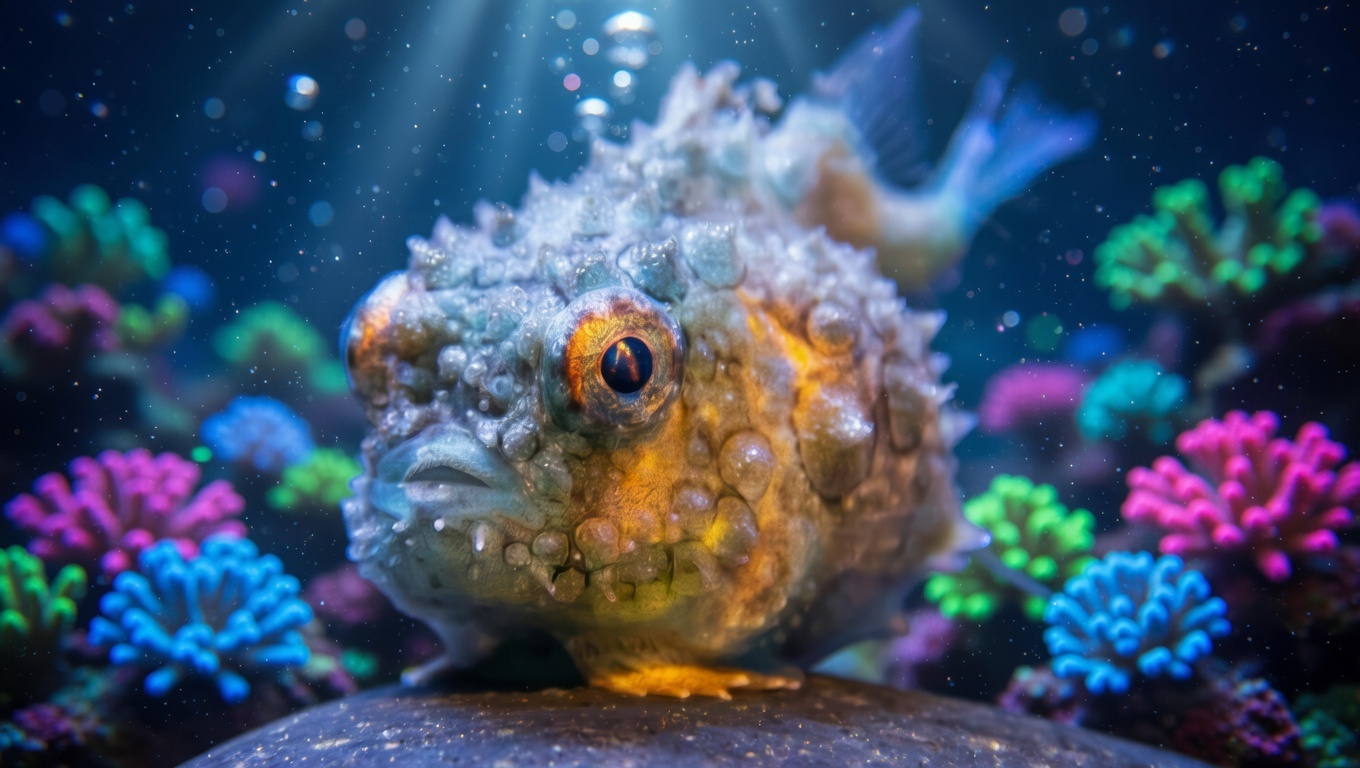
The ocean is full of strange and wonderful creatures, but none are quite as charming as the spiny lumpsucker. This tiny fish looks like a little round ball covered in spikes. It is famous for being one of the cutest residents of the deep blue sea. Many people think it looks like a “sea chicken nugget” or a tiny floating balloon.
While it may look like a toy, the spiny lumpsucker is a tough survivor. It lives in cold waters and has many cool tricks to stay safe. In this guide, we will dive deep into its world. You will learn how it sticks to rocks, what it likes to eat, and why it is so special. Whether you love marine life or just like cute animals, this little fish will surely win your heart with its funny face and round body.
Quick Biography of the Spiny Lumpsucker
| Feature | Details |
| Common Name | Spiny Lumpsucker (or Pacific Spiny Lumpsucker) |
| Scientific Name | Eumicrotremus orbis |
| Average Size | 1 to 3 inches long |
| Body Shape | Globular or ball-shaped |
| Unique Feature | Suction disc on the belly |
| Skin Type | No scales; covered in bony “tubercles” |
| Colors | Green, brown, orange, and red |
| Lifespan | Approximately 3 to 7 years |
| Habitat | Cold coastal waters of the North Pacific |
| Diet | Small worms, crustaceans, and mollusks |
What Exactly Is a Spiny Lumpsucker?
The spiny lumpsucker is a very small fish that belongs to a family called Cyclopteridae. This name comes from Greek words that mean “circle” and “wing.” It is a perfect name because the fish is shaped like a little circle. Most of these fish are only about one to three inches long. That is roughly the size of a ping-pong ball! Unlike most fish you see at the beach, they do not have smooth scales. Instead, their bodies are covered in hard, cone-shaped bumps.
These bumps are called tubercles. They act like a suit of armor to protect the tiny fish from danger. When you see one, you might notice its big, bulging eyes and its wide mouth. It often looks like it is surprised or smiling. This funny expression makes it a favorite for divers and photographers who explore the cold parts of the Pacific Ocean.
The Incredible Suction Disc: Nature’s Little Magnet
One of the most amazing things about the spiny lumpsucker is its belly. Underneath its round body, it has a special suction cup. This is actually made from its pelvic fins which have grown together over time. This suction disc is very strong for such a tiny creature. It allows the fish to stick itself onto rocks, kelp, or even the glass of an aquarium!
This is very important because these fish are not very good at swimming. They do not have a swim bladder, which is an organ most fish use to float. Without it, they tend to sink or wobble through the water. By sticking to a rock, they can stay in one place even when the ocean waves are very strong. It is like having a built-in anchor that keeps them from being swept away by the current.
Where Do These Round Little Fish Live?
You can find the spiny lumpsucker in the cold, chilly waters of the North Pacific Ocean. They love places like the Puget Sound in Washington State and the icy waters around Alaska. They are also found near the coasts of Japan and Russia. These fish prefer to stay in shallow areas where there are plenty of things to stick to. You might find them hiding in eelgrass beds or clinging to large pieces of kelp.
Some brave little lumpsuckers have even been found as deep as 480 feet below the surface! They enjoy the cold because their bodies are built for it. In the winter time, they often move closer to the shore. This is when lucky divers have the best chance to see them. They blend in perfectly with the colorful rocks and seaweed found in these rocky underwater gardens.
The Secrets of Their Spiny Armor
The “spiny” part of their name comes from the hard plates on their skin. Scientists have found that these spines are made of enamel, which is the same tough stuff that covers your teeth! These spines grow in rows along their bodies as they get older. When they are just babies, they are smooth, but the armor starts to appear as they grow. This armor serves two main purposes. First, it makes it very hard for a predator to swallow them.
Imagine trying to eat a tiny, prickly ball! Second, the armor helps protect them if they get tossed against rocks by a big wave. Since they live in rough coastal areas, having a hard shell is a great way to stay safe from bumps and bruises. This unique defense is one reason why the spiny lumpsucker has survived in the wild for so long.
A Rainbow of Colors in the Deep Sea
If you look at a group of these fish, you will notice they come in many different colors. They can be bright green, dull brown, or even a pretty orange or red. Interestingly, the males and females often look very different. This is called sexual dimorphism. Usually, the females are larger and tend to be green or brown. The males are smaller and can turn bright red or orange, especially when it is time to find a mate.
Their colors are not just for looking good, though. They use these shades to hide from bigger fish. A green spiny lumpsucker can disappear perfectly inside a patch of sea lettuce. A brown one might look just like a small rock on the ocean floor. This camouflage is their best way to stay invisible while they wait for their next meal to swim by.
What Does a Spiny Lumpsucker Eat?
Even though they are small, these fish have a healthy appetite. They are carnivores, which means they eat other tiny animals. Their favorite snacks include small crustaceans like shrimp and crabs. They also enjoy eating marine worms and tiny mollusks. Because the spiny lumpsucker is not a fast swimmer, it does not chase its food very often. Instead, it uses a “sit and wait” strategy.
It will stick itself to a rock or a piece of seaweed and wait for something tasty to drift close. When a tiny worm or shrimp swims within reach, the lumpsucker quickly snaps its mouth open and gulps it down. It is a very efficient way to hunt! In aquariums, they are often fed frozen mysis shrimp, which they seem to enjoy just as much as their natural food in the wild.
Family Life: The World’s Best Fish Dads
When it comes to raising a family, the male spiny lumpsucker is a true hero. During the spawning season, which happens between July and October, the females lay their eggs in small holes or on flat rocks. A single female can lay up to 200 bright orange eggs! Once the eggs are laid, the mother swims away, leaving the father in charge. The male then uses his suction cup to stick right next to the eggs.
He stays there for several weeks to protect them from hungry crabs and sea stars. He also uses his fins to wave fresh water over the eggs so they get plenty of oxygen. He is so dedicated that he often forgets to eat while he is on guard duty. This amazing care helps make sure that the tiny baby fish have the best chance to hatch and grow.
Why They Are Not the Best Swimmers
If you ever watch a spiny lumpsucker try to swim, you might laugh a little bit. Because their bodies are shaped like balls and their fins are very small, they are quite clumsy. They do not glide through the water like a shark or a salmon. Instead, they flap their little side fins very fast, which makes them wiggle and bob around. It looks a lot like a tiny helicopter trying to take off!
Because they lack a swim bladder, they have to work very hard just to stay off the bottom. If they stop flapping, they will slowly sink down. This is why they love their suction discs so much. It is much easier to just stick to something and relax than it is to struggle against the water. Their “bad” swimming is actually a very funny and cute part of their personality.
Predators: Who Tries to Eat a Lumpsucker?
Life in the ocean can be scary for a fish that is only two inches long. The spiny lumpsucker has to watch out for many bigger predators. Large fish like Pacific cod and sculpins are always looking for a snack. Sea birds might also try to grab them if they are in very shallow water. Even crabs and sea stars will try to eat the lumpsucker eggs if the father is not watching closely.
To stay safe, the fish relies on its spines and its ability to hide. If a predator gets too close, the lumpsucker might tuck itself into a tiny crevice where the bigger fish cannot reach it. Their small size is actually an advantage here because they can fit into spots that other fish cannot. By staying still and blending in, they manage to avoid becoming dinner most of the time.
Lumpsuckers in the Public Spotlight
In recent years, the spiny lumpsucker has become a big star on the internet. People love sharing videos of them sticking to things or wiggling their fins. Many public aquariums, like the Seattle Aquarium or the Monterey Bay Aquarium, have special tanks just for them. Visitors love to see them because they are so different from other fish.
They are often kept in “cold water” exhibits where the temperature is just right for them. Because they are so small and stay in one place, they are very easy to observe. Scientists also study them to learn more about how fish adapt to rough environments. Their unique bodies tell a story of how nature can find clever solutions to big problems. Seeing one in person is a treat that helps people appreciate the tiny wonders of our oceans.
Can You Keep One as a Pet?
Many people wonder if they can have a spiny lumpsucker in a home aquarium. While it is possible, it is actually very difficult. These fish need very cold water to survive. Most home fish tanks are too warm for them. To keep one happy, you would need a special cooling system called a chiller to keep the water at about 45 to 50 degrees Fahrenheit.
They also need very clean water and a steady supply of live or frozen food. Because they are delicate, they are usually only kept by expert reef keepers or professional aquarists. It is often better to visit them at a public aquarium where they have everything they need to stay healthy. However, for those who have the right equipment, these fish are some of the most rewarding and interesting pets to watch because of their unique habits.
Conservation: Protecting Their Icy Home
Even though the spiny lumpsucker is not currently considered an endangered species, it still faces some big challenges. One of the biggest threats is climate change. As the ocean water gets warmer, the cold-water habitats that these fish love are starting to disappear. Pollution is another problem, as tiny bits of plastic can end up in the areas where they live and eat.
Overfishing of other species can also change the balance of the ocean, making it harder for the lumpsucker to find food or avoid predators. It is important for us to protect our coastlines and keep the water clean. By supporting marine protected areas, we can make sure that these adorable “sea nuggets” have a safe place to live for many years to come. Every small action we take to help the ocean helps the tiny creatures that live there too.
Conclusion: A Tiny Treasure of the Sea
The spiny lumpsucker is proof that you do not have to be big or fast to be amazing. This little fish has found a way to thrive in the wild by being tough, sticky, and very cute. From its incredible suction disc to its tooth-like armor, every part of its body is designed for survival. It reminds us that the ocean is full of hidden gems that are waiting to be discovered.
By learning about creatures like the lumpsucker, we can better understand the balance of nature. We should all do our part to keep the oceans clean so that these round, prickly friends can keep sticking to rocks for generations to come. Next time you think of the ocean, remember the tiny spiny lumpsucker and its brave journey through the waves.