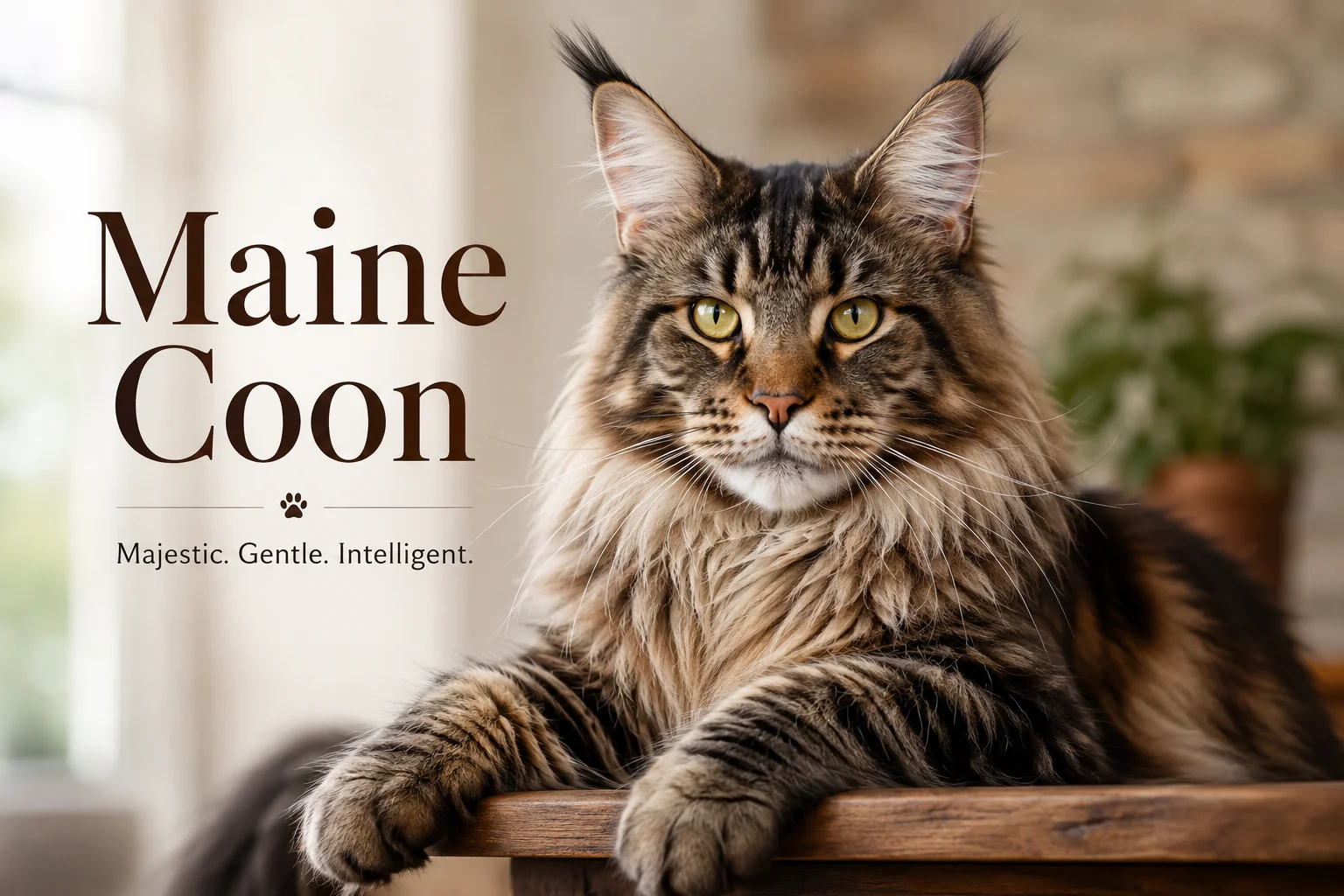
Most people underestimate what Maine Coon ownership actually involves. You’re not adopting a standard house cat—you’re welcoming a 20-pound personality that demands grooming time, active engagement, and genuine financial commitment.
Without proper preparation, shredded furniture, matted coats, and preventable health crises drain your bank account and patience. But prepare correctly? You get 15 years of genuine companionship with an intelligent, playful animal that behaves more like a dog than a cat.
This guide covers what elite breeders, veterinary specialists, and experienced owners actually know about thriving with this remarkable breed.
What Is a Maine Coon Cat?
Maine Coons stand as one of the world’s largest domesticated cat breeds. Native to Maine, they developed naturally—not through engineered breeding—by adapting to harsh northeastern winters. Unlike hybrid breeds designed in labs, these cats evolved through real-world selection pressure.
The Cat Fanciers’ Association (CFA) and The International Cat Association (TICA) recognize Maine Coons for their distinctive physical presence: substantial muscular bodies, tufted “lynx” ears, prominent mane-like ruffs, and bushy tails. Their water-resistant double coats and large paws reflect generations of cold-climate adaptation.
What truly separates them from standard cats is temperament. Maine Coons possess dog-like loyalty, curious intelligence, and surprising gentleness despite their imposing size.
History: Natural Selection, Not Mythology
Local folklore claimed Maine Coons descended from raccoon-cat crosses (biologically impossible) or were gifts from Marie Antoinette during the French Revolution (romantically false). The truth is simpler and more fascinating.
New England seafarers brought long-haired foreign cats aboard trade ships for rodent control. These maritime cats mated with local short-haired American cats, producing cold-hardy animals excelling at hunting. Over generations, natural selection favored larger frames, thicker coats, and superior cold tolerance.
By the 1860s, Maine Coons appeared at early cat shows. Maine officially recognized the breed as the state cat in 1985. Unlike artificial hybrid breeds, Maine Coons have a balanced temperament and generally good health due to their spontaneous evolution.
Physical Characteristics: What You’re Getting
Males: 15–25 pounds, 38–40 inches nose-to-tail Females: 10–15 pounds, slightly shorter length Maturity: 3–5 years (significantly longer than standard cats) Lifespan: 12–15 years average
Maine Coons display distinctive features reflecting function: large expressive eyes (golden-green to deep blue), prominent neck ruffles, tufted ears with lynx tips, and substantial paws with visible fur between toe pads. Their rectangular muscular body and bushy tail create an unmistakable silhouette.
Coat colors span nearly every feline combination—solid blacks, oranges, creams, various tabby patterns, tortoiseshells, and calicos. The texture is deliberately heavy and shaggy, not silky or refined.
Temperament: The Gentle Giant Truth
Here’s what surprises owners: these wild-looking animals are remarkably gentle. Maine Coons possess exceptionally high patience thresholds, particularly with children and other pets. They maintain kitten-like playfulness well into senior years.
They don’t meow like typical cats—they chirp, trill, and produce tiny squeaks that seem comical from a 20-pound animal. This gentle vocalization reveals their patient temperament. They’re not demanding attention through aggressive yowling; they’re quietly requesting companionship.
Unlike cats that prefer lap-sitting for hours, Maine Coons want proximity. They follow you room-to-room, sit nearby while you work, and maintain awareness of your location. This companionship without claustrophobia appeals to many owners.
Their intelligence surprises owners. Many Maine Coons learn to fetch, walk on leashes, respond to commands, and play interactive games with actual rules. Boredom, however, becomes destructive—they’ll open cabinets, knock items off shelves with precision, and rearrange your belongings during the night.
Grooming: The Reality and Routine
Maine Coon coats don’t self-maintain. Their dense double coats create matting conditions frighteningly fast without consistent grooming. Painful mats pulling skin aren’t rare—they’re inevitable without proper maintenance.
Essential routine:
- Slicker brush: 2–3 times weekly, working with hair growth
- Metal comb: Immediately after slicker brushing, catching deep knots
- Problem zones: Armpits, hindquarters, neck ruff, stomach (friction areas prone to matting)
- Session time: 15–20 minutes per session
Seasonal shedding (spring and fall) requires daily grooming for 3–4 weeks. Professional grooming ($100–$200) helps during heavy shedding if needed.
Skip grooming consistently, and you’re guaranteeing painful mats, skin infections, and possible surgical removal. The alternative is worse than the prevention effort.
Nutrition for Growth and Health
Maine Coons reach full skeletal maturity at 3–5 years—significantly longer than standard cats. This extended growth demands high-quality nutrition supporting steady development without rapid unhealthy weight gain.
Select commercial foods where identifiable meat is the first ingredient: chicken, turkey, salmon, or beef. Avoid recipes where grains (corn, wheat) or meat by-products lead the ingredient list.
Portion control matters. A 25-pound Maine Coon is healthy; a 30-pound Maine Coon faces serious joint and organ stress. Most adults need 250–350 calories daily. Measure portions using kitchen scales, not eyeballs. Monitor weight monthly.
Maine Coons love water more than typical cats (water-resistant coats and maritime ancestry). Pet fountains often encourage better hydration than static bowls. Adequate water intake protects kidneys—important given genetic kidney disease predispositions.
Health Concerns: Genetic Screening Matters
Maine Coons carry genetic predispositions to specific conditions. Responsible breeders screen parent cats with DNA testing. Knowing these issues helps you identify early warning signs.
Hypertrophic Cardiomyopathy (HCM): Heart muscle thickening reducing pumping efficiency. Most common Maine Coon heart condition. Warning signs: lethargy, breathing difficulty, reluctance to exercise. Requires annual ultrasound screening after age 2–3.
Hip Dysplasia: Hip joint malformation causing arthritis. Weight control is primary intervention—maintaining ideal weight reduces joint stress significantly. Pain management and supplements (glucosamine, omega-3s) help affected cats.
Spinal Muscular Atrophy (SMA): Genetic motor neuron disease causing muscle weakness. Genetic screening identifies carriers, preventing affected kittens when breeders test appropriately.
Polycystic Kidney Disease (PKD): Progressive kidney disease with cyst development. Genetic screening identifies carriers; responsible breeders test before breeding.
When selecting breeders, request health documentation: HCM ultrasound results, SMA/PKD genetic tests, and hip dysplasia evaluations. Insist on written health guarantees covering hereditary defects.
Exercise and Mental Stimulation Needs
Intelligence demands outlets. Under-stimulated Maine Coons become creative pests, opening cabinets and knocking items off shelves. Daily engagement prevents boredom-driven destruction.
Daily requirements: 30–45 minutes total engagement spread across sessions:
- Morning play: 10–15 minutes with interactive wands
- Midday: Solo puzzle toys or food-dispensing games
- Evening: Another 10–15 minute interactive session
Toys that work: Interactive wand toys (feather attachments), food puzzle feeders, fetch games, tall scratching posts (6+ feet), climbing structures, window perches for bird-watching, harness walking.
Many Maine Coons learn to fetch repeatedly and walk comfortably on leashes. Start harness training young—it requires patience but expands enrichment opportunities.
Family Compatibility: Kids, Dogs, and Small Pets
Maine Coons excel in active multi-pet households. Their substantial size makes them sturdy enough for normal childhood roughhousing without fragility concerns. They maintain tolerant, playful attitudes matching children’s energy.
They typically coexist peacefully with other cats (especially other Maine Coons) and dogs. Introduce new animals gradually using scent-swapping and supervised meetings. Their high hunting drive remains strong—keep small pets (hamsters, birds, reptiles) completely inaccessible.
Their dog-like confidence often creates genuine friendships with canine companions. Many Maine Coons and dogs become active playmates.
Finding Reputable Breeders: Non-Negotiable Standards
Quality Maine Coon kittens from verified breeders cost $1,500–$3,500. Prices below this warrant investigation—you’re likely funding unethical operations.
Red flags: General marketplace sales, multiple simultaneous litters, no health documentation, unwillingness to discuss genetics, selling under 12 weeks, no contracts or guarantees.
Green flags: CFA/TICA membership, HCM ultrasound documentation, SMA/PKD genetic tests, hip dysplasia evaluations, written contracts with health guarantees, reasonable waiting lists (6–12+ months indicates responsible breeding), breeder references.
Quality breeders screen applicants thoroughly: detailed questionnaires, veterinary references, lifestyle discussions, sometimes home visits. This vetting isn’t excessive—it’s responsible breed stewardship.
Before purchasing, verify: veterinary health certificates, genetic test results, vaccination records, pedigree documentation, written contracts, and care recommendations.
Cost of Ownership: Financial Reality
Maine Coon ownership requires greater commitment than average cat care. Everything scales with their size.
Initial setup (Year 1): $3,100–$5,800
- Kitten: $1,500–$3,500
- Oversized litter box/litter: $150–$300
- Heavy-duty cat tree: $300–$600
- Quality grooming tools: $100–$200
- Initial vet care: $300–$500
- Carriers, toys, bowls: $250–$600
Annual ongoing costs: $1,700–$3,560
- Premium food: $480–$960
- Litter/supplies: $200–$300
- Routine vet care: $300–$500
- Flea/tick prevention: $200–$400
- Professional grooming: $200–$800
- Pet insurance (optional): $300–$600
Over a 15-year lifespan, you’re committing to $25,000–$50,000+ total costs. Emergency expenses exceed this regularly.
Common Behavioral Expectations
Water obsession: They splash in bowls, pat at faucets, follow you to showers, swat running water. Expect water-related messes—pet fountains channel this interest productively.
Shedding: Continuous year-round with heavy seasonal cycles twice yearly. Grooming reduces but doesn’t eliminate it. Lint rollers become permanent household items.
Late-night zoomies: Sudden high-energy activity bursts (typically 10 PM–2 AM) require adequate daytime engagement to manage.
Following behavior: They become “velcro cats,” maintaining awareness of your location throughout the day. Expect less solitude than anticipated.
Maine Coons vs. Standard Domestic Cats
| Feature | Maine Coon | Standard Cat |
|---|---|---|
| Adult Weight | 10–25 lbs | 8–11 lbs |
| Full Maturity | 3–5 years | 12–18 months |
| Grooming Required | 2–3x weekly deep brushing | Minimal self-grooming |
| Water Interest | High; loves splashing | Low; avoids water |
| Training Capability | Excellent; dog-like | Limited; independent |
| Exercise Needs | High; 30–45 min daily | Moderate; self-entertaining |
| Space Requirements | 800+ sq ft optimal | 400–600 sq ft acceptable |
Rescue Alternative
Maine Coon-specific rescue organizations offer adoption as alternatives to breeders. Advantages include lower costs ($200–$600), adult cats with established personalities, and supporting rescue missions. Search “Maine Coon rescue [region]” or check Petfinder.com for available cats.
Frequently Asked Questions
How big do Maine Coons get?
Males: 15–25 pounds, 38–40 inches nose-to-tail. Females: slightly smaller.
How often should grooming happen?
Brush 2–3 times weekly year-round; daily during spring/fall shedding seasons.
Do they like water?
Yes. Their water-resistant coats and maritime heritage created a breed tolerating water better than typical cats.
Indoor or outdoor?
Keep them indoors exclusively. They’re valuable animals vulnerable to traffic, disease, theft, and fights. Harness training provides safe outdoor access.
How long do they live?
Average 12–15 years with proper care; some reach late teens.
Do they shed a lot?
Yes. Continuous year-round shedding with heavy cycles twice yearly. Regular brushing removes dead hair before it covers everything.
Can they be left alone?
No. They’re social animals needing daily engagement, developing separation anxiety if left 24+ hours regularly.
Final Assessment: Is a Maine Coon Right For You?
✓ They thrive with you if:
- You have 800+ square feet of space
- You’re home regularly (not 8+ hours daily consistently)
- You enjoy grooming
- You can budget $1,700–$3,500 annually for 15+ years
- You appreciate active cat engagement
- You don’t mind fur on everything
- You’ll provide 30–45 minutes daily interaction
- You have children 5+ years old or other pets
✗ They struggle if:
- You have limited space (<600 sq ft)
- You travel frequently or work long hours
- You want low-maintenance, independent pets
- You have budget constraints
- You have young toddlers requiring constant pet supervision
- You dislike grooming and shedding
- You want cats content alone for extended periods
Conclusion: Beginning Your Maine Coon Journey
Maine Coons aren’t low-maintenance house decorations—they’re interactive family members demanding time, attention, and resources. They’re not for people preferring independent cats.
But thousands of owners testify the investment pays dividends in companionship, entertainment, and mutual affection. These gentle giants become genuine family members over their 15-year lifespans.
Research thoroughly, prepare your home adequately, and purchase from verified breeders committed to health screening. Your Maine Coon will reward preparation with loyalty, playfulness, and affection making you wonder why you ever considered other breeds.